Over the past year, “Physical AI” has emerged as a critical frontier—a “ticket to the future”—that autonomous driving companies and automakers alike are racing to secure.
With various players entering the Physical AI space from different angles—leveraging world models, embodied large models, and robotics data—many aim to take center stage in this burgeoning sector. In contrast, OnTime (Ruqi Mobility) has chosen a less conspicuous path: rather than training its own large models, it seeks to become the data infrastructure supporting them.
In fact, as early as 2023, OnTime began considering what role a mobility platform—beyond providing services like Robotaxis—could play in the AI industry. Over the subsequent two years, the company gradually established a closed-loop data system, connecting drivers, Robotaxis, and urban road networks on one end, while supporting the training and iteration of autonomous driving models on the other.
The rise of embodied intelligence has opened up new avenues for applying these capabilities.
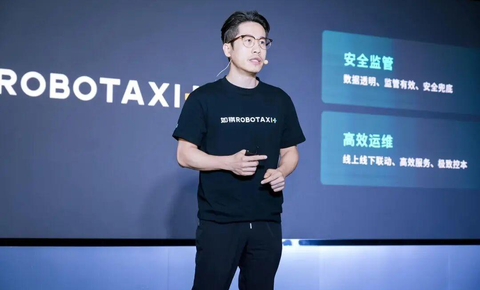
Han Feng, COO of OnTime, notes that while the data requirements for autonomous driving and intelligent robots differ—autonomous driving primarily involves perception, decision-making, and movement within a 2D road environment, whereas robots operate in 3D space, handling tasks like grasping, transport, and precision manipulation—the underlying data processing workflows are remarkably similar. Processes such as data collection, preprocessing, annotation, quality control, and export share a common toolchain that can be reused across both domains.
However, given the high costs and long timelines associated with collecting real-world data, an increasing number of intelligent driving and embodied intelligence companies are turning to world models and simulation platforms to generate synthetic data. This approach supplements limited real-world datasets and enhances model training efficiency.
Yet, Han Feng believes that the increasing power of world models does not diminish the importance of real-world data. Synthetic data can leverage real-world “long-tail” cases to expand the dataset to include dangerous, edge-case, and complex traffic scenarios that are difficult to capture repeatedly. Meanwhile, real-world scenario data continuously records unpredictable behaviors of traffic participants, changes in road environments, and physical sensor responses; this helps identify previously undetected issues and provides a basis for calibrating and validating synthetic results. Together, the two form a complementary closed loop: real-world data drives discovery and validation, while synthetic data enables targeted scenario expansion. Currently, Ruqi Mobility aims to continuously acquire authentic, continuous, and large-scale data at a low cost by deploying data-collection vehicles, Robotaxis, and an offline operations network for routine mobility services. It then leverages an established data closed-loop to transform this raw data into training materials ready for immediate use by companies specializing in autonomous driving, world models, and embodied AI.
While this may not be the most sensational narrative within the wave of “physical AI,” it is closer to actual industrial implementation. The current landscape lacks a shortage of model companies; rather, there is a scarcity of organizational capabilities to consistently acquire data from real-world scenarios and process that raw data into usable assets.
Should these capabilities continue to expand, Ruqi Mobility’s role within the AI industry will likely evolve—much like how many companies today are shedding their old labels to emphasize their identity as “physical AI” players.
However, Han Feng states that three years from now, he hopes the public will still view Ruqi Mobility as a mobility service provider, while simultaneously recognizing it as vital infrastructure within the AI data ecosystem.